


Water vs Oil TCU: How to Choose the Right Temperature Control Unit
A practical guide to selecting between water and oil-based temperature control for your industrial process
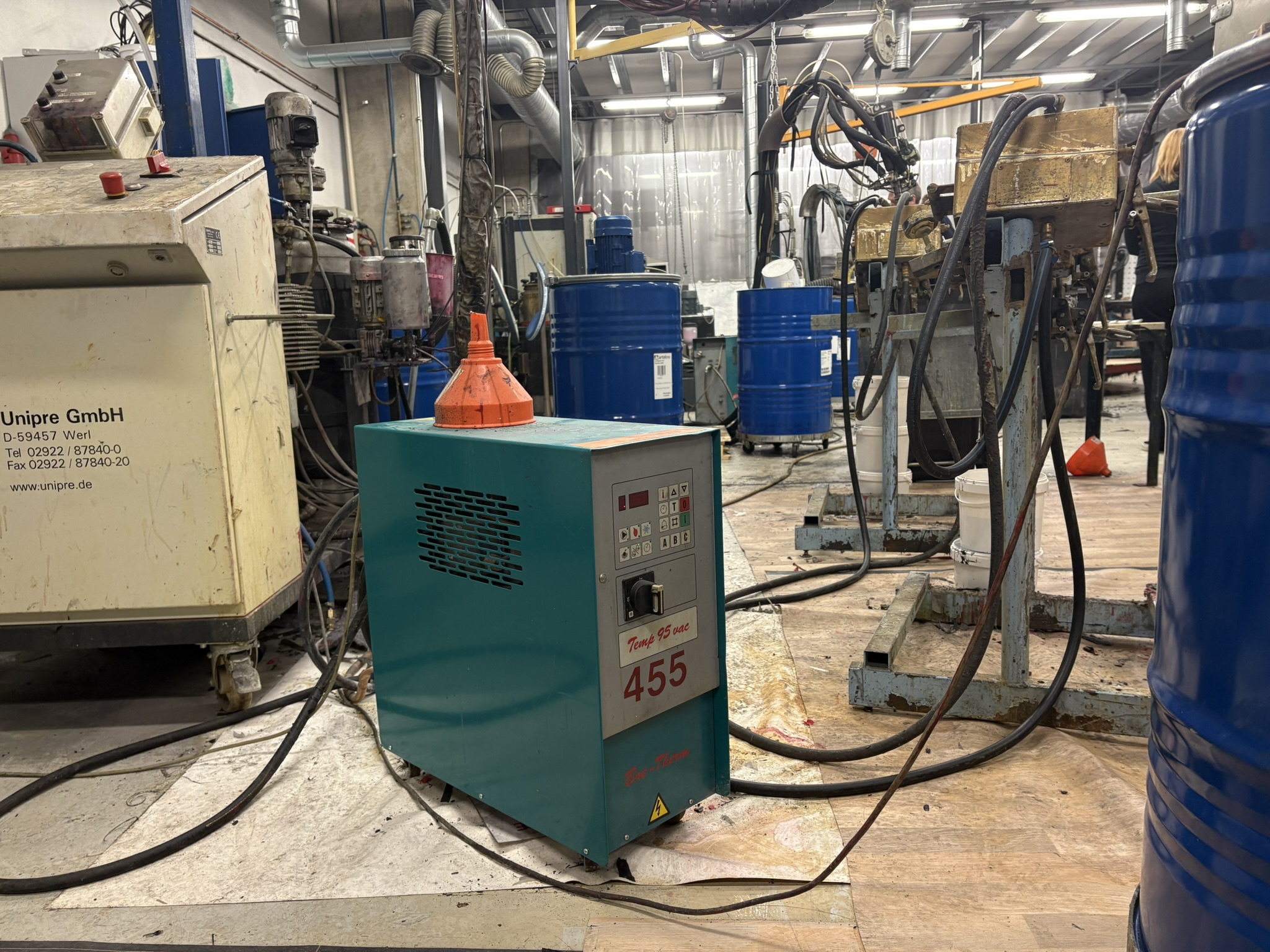
When Does Water Work, and When Do You Need Oil?
Choosing between a water-based and an oil-based Temperature Control Unit (TCU) is one of the most fundamental decisions in process temperature management. The choice directly impacts your energy costs, maintenance requirements, process precision, and operational safety. This guide breaks down the key factors so you can make the right decision for your specific application.
Temperature Range: The Primary Decision Factor
The operating temperature of your process is the single most important factor. Water-based TCUs operate efficiently up to approximately 160°C (pressurized systems). Above this threshold, oil becomes necessary as the heat transfer medium, with modern oil TCUs capable of reaching up to 350°C.
If your process runs below 140°C, which covers most injection moulding, food production and many chemical processes, a water TCU is almost always the better choice. Water has significantly better thermal conductivity than oil, which means faster response times and more precise temperature control.
Heat Transfer Efficiency
Water's specific heat capacity is roughly twice that of thermal oil. In practical terms, this means a water-based TCU transfers energy to and from your process faster and more efficiently. For processes where rapid temperature changes or tight tolerances are critical, water responds faster. Model-specific control accuracy is stated in each datasheet.
Oil systems, while slower in response, provide stable temperature control at elevated temperatures where water would require impractical pressurisation levels. For applications like die casting, rubber vulcanisation, or high-temperature lamination, oil is the only viable option.
Energy Costs and Operational Efficiency
Water-based systems are inherently more energy-efficient due to water's superior heat transfer properties. They require less energy to heat and cool the process loop, resulting in lower operating costs over the lifetime of the unit. Water carries roughly twice the specific heat capacity of thermal oil, so within its range a water unit moves the same heat with less pumped volume and shorter heater cycles.
Oil systems consume more energy during heat-up phases and require additional considerations for cooling. However, at their intended operating temperatures (above 160°C), they remain the most practical and cost-effective solution.
Maintenance and Operational Considerations
Water-based TCUs are generally simpler to maintain. Water is non-flammable, odourless, and easy to handle. The primary maintenance concern is water quality: scale buildup and corrosion can be managed with proper water treatment.
Oil systems require more attention: thermal oil degrades over time and must be monitored and replaced periodically. Oil leaks present slip hazards and environmental concerns. Fire safety measures must be in place for systems operating above oil flash points. Despite these considerations, modern oil TCUs are designed with comprehensive safety systems that minimise these risks.
Application Guide: Quick Reference
Choose a water TCU when: Your process operates below 140°C, you need fast temperature response, energy efficiency is a priority, or you work in food or pharmaceutical production where oil contamination is unacceptable.
Choose an oil TCU when: Your process requires temperatures above 160°C, you work with die casting, rubber processing, or high-temperature lamination, or your application demands stable high-temperature operation over extended periods.
Consider a pressurised water system (140-160°C) when: Your process sits in the overlap zone. Pressurised water systems offer the thermal efficiency benefits of water at elevated temperatures, though they require pressure-rated components and appropriate safety measures.
Making the Right Investment
The right TCU is not just about today's requirements. Consider your future production plans, potential process changes, and total cost of ownership over the unit's lifetime, which can exceed 30 years: we still service units installed in the 1990s, and spare parts stay available for the life of the machine. Getting expert advice from a manufacturer who produces both water and oil systems ensures an unbiased recommendation based on your actual process needs.
At Boe-Therm, we manufacture both water TCUs (90-160°C) and oil TCUs (up to 350°C), and our engineering team can help you determine the optimal solution for your specific application. Contact us for a technical consultation.


Built for your process. Backed by
60 years of experience.

get in touch
info@boe-therm.dk+45 64 71 23 75+49 170 6812 045Our team is ready to help with your specific process requirements. Whether you're looking for TCU specifications, maintenance support, or custom solutions, fill out the form and a Boe-Therm specialist will respond within 24 hours.