


Oversized vs. Undersized: The Hidden Costs of a Mismatched TCU
The wrong temperature control unit does not announce itself with an alarm. It shows up as scrap, slow cycles, premature wear, and energy bills that are higher than they should be.
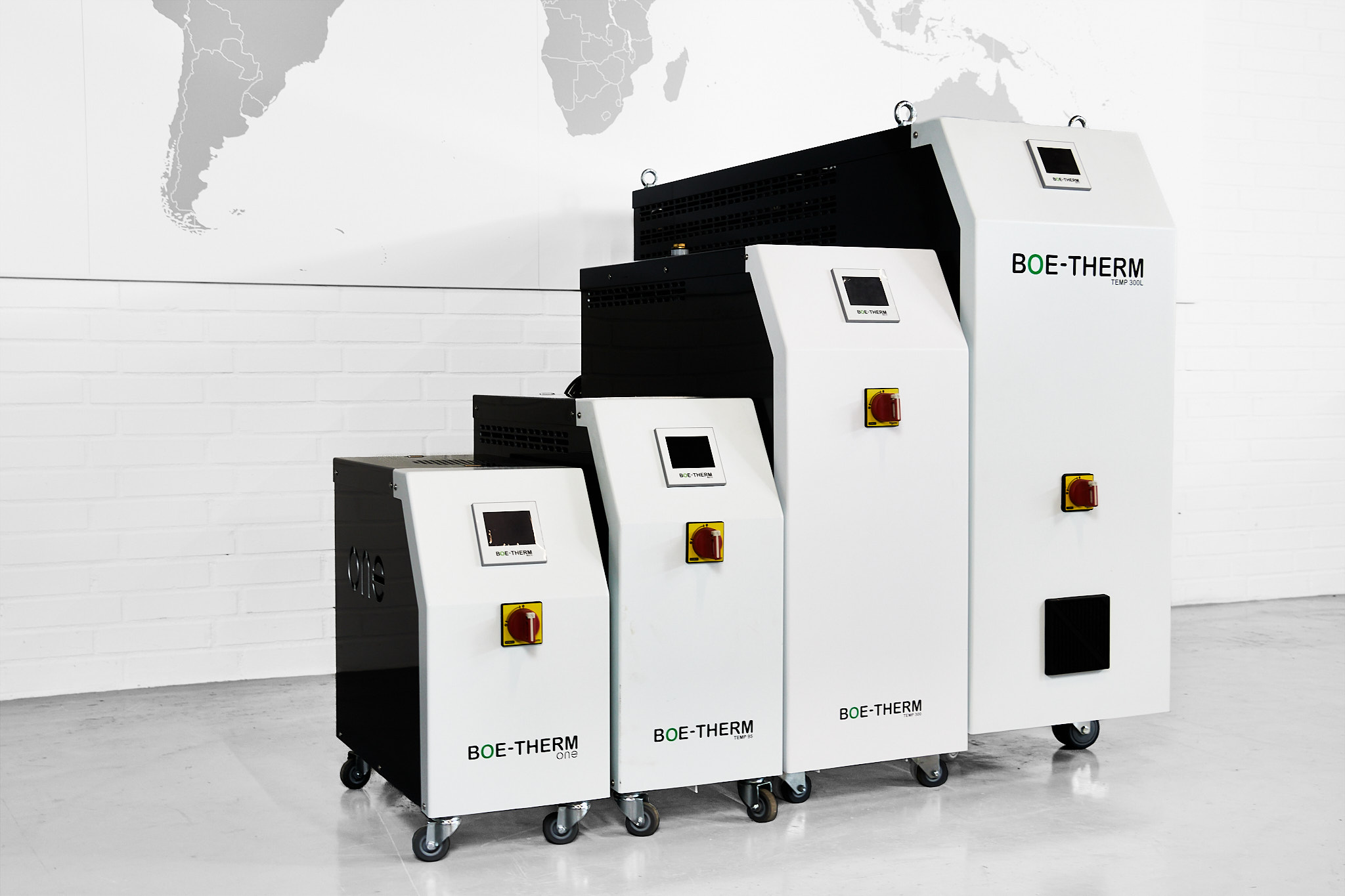
Two Kinds of Wrong
A temperature control unit that does not match the process can fail in two directions. Both cost money, but the symptoms are different, and neither is immediately obvious as a TCU problem.
The Oversized TCU
An oversized unit seems like the safer choice. More capacity means more headroom. In practice, the opposite often happens.
Temperature overshoot. A 24 kW heater controlling a process that only needs 6 kW will overshoot the setpoint on every heat-up. The controller compensates by cycling the heater on and off rapidly, but the thermal inertia of a large heating element makes precise control harder, not easier. The temperature stability the datasheet states for a correctly sized unit is not what you get from an oversized one. Control accuracy degrades as heating capacity moves further from the actual load.
Energy waste. The pump in an oversized unit is designed for higher flow rates and pressures than the process requires. Running a 1.5 kW pump motor when a 0.75 kW pump would suffice means paying for electricity that produces no production benefit. Over a year of continuous operation, this adds up to hundreds of euros per unit.
Higher purchase cost. The price difference between a correctly sized unit and the next size up can be €500-1,500. Multiply by the number of units on your production floor, and the overinvestment becomes significant.
The Undersized TCU
An undersized unit is more immediately problematic, but the root cause is harder to diagnose because the symptoms look like production problems, not equipment problems.
Slow heat-up. A unit that takes 45 minutes to reach setpoint instead of 20 minutes means lost production time at every shift start, every mould change, and every unplanned stop. If you run two shifts and change moulds once per day, the difference adds up to over 150 hours of lost production per year.
Temperature drop during production. If the cooling demand exceeds the TCU's cooling capacity, the return temperature rises. The controller opens the cooling valve fully, but it is not enough. The result: setpoint cannot be maintained, and process temperature drifts upward. In injection moulding, this leads to dimensional variation, flash, and inconsistent surface finish.
Extended cycle times. When the TCU cannot remove heat fast enough, the mould temperature rises, and cooling time must be extended. Even a 2-second increase per cycle on a 25-second process running 50,000 cycles per month means over 27 hours of additional machine time, without producing a single extra part.
Premature mould wear. In die casting and high-temperature moulding, insufficient cooling creates thermal hotspots that accelerate thermal fatigue cracking. Replacing a die casting die costs €20,000-50,000 or more.
Why Mismatches Are So Common
The same as last time specification. The most common approach: check the nameplate on the old unit and order the same. But the old unit may have been wrong from the start, or the process may have changed.
Safety margins stacked on safety margins. The process engineer adds 20% headroom. Purchasing rounds up to the next available model. The supplier recommends one size larger. The result is a unit substantially larger than the process needs.
No easy way to calculate. Without an accessible calculation tool, even experienced engineers default to estimation.
How to Check Whether Your Current TCU Is Right
Signs of oversizing: The heater indicator rarely stays on for extended periods. The pump feels like it is working hard but the mould heats slowly. The unit runs but the temperature barely fluctuates, you are paying for capacity you do not use.
Signs of undersizing: The heater runs continuously near setpoint. The cooling valve is permanently wide open. Setpoint takes a long time to reach. Process temperature drifts during high-speed production.
Calculate, Do Not Guess
We have published a free online configurator that calculates exact TCU requirements based on your process parameters. Enter your application type, material, operating temperature, and basic process data, the tool calculates the heating, cooling, and flow requirements and recommends a matching configuration.
It takes about two minutes and requires no registration.
Even if you do not need a new unit today, the result tells you whether your current equipment is matched to your process, or whether you are leaving money on the table.


Built for your process. Backed by
60 years of experience.

get in touch
info@boe-therm.dk+45 64 71 23 75+49 170 6812 045Our team is ready to help with your specific process requirements. Whether you're looking for TCU specifications, maintenance support, or custom solutions, fill out the form and a Boe-Therm specialist will respond within 24 hours.